Money is one of those things that is easy to overlook when planning a trip, until you are on a small island with no ATM and a guesthouse that only takes cash. Understanding money in the Maldives before you go saves stress, fees and awkward moments. This guide explains the currency, when to use rufiyaa or dollars, cards and ATMs on local islands, tipping and simple tips to manage your budget.
The currency: Maldivian rufiyaa
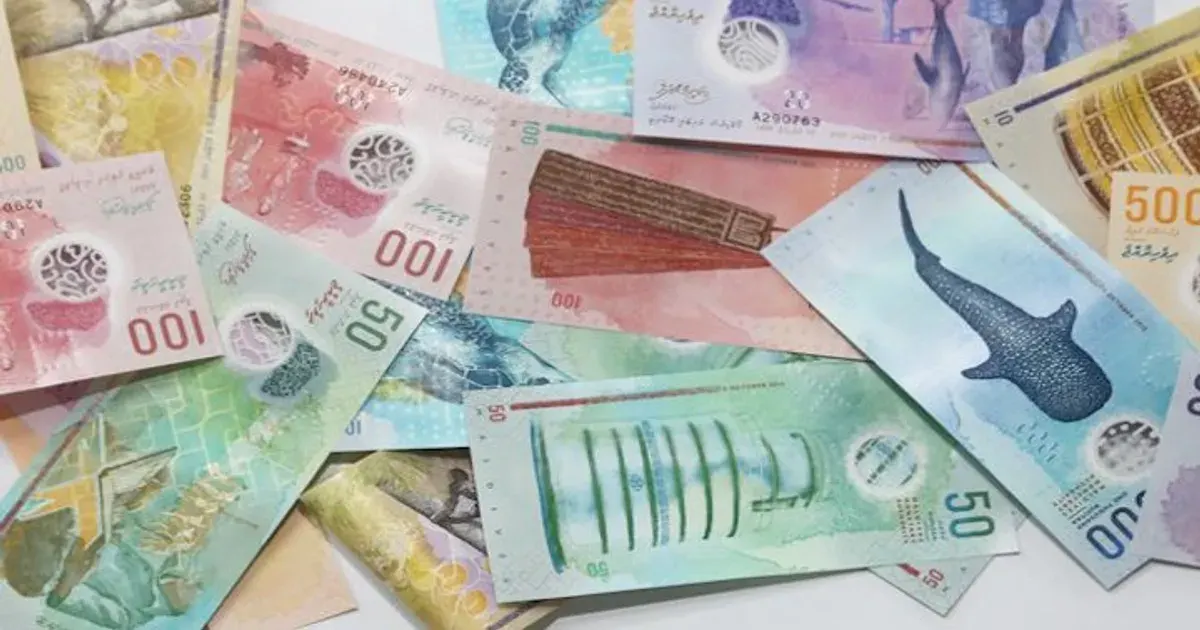
The official currency of the Maldives is the Maldivian rufiyaa (MVR), divided into 100 laari. Notes come in several denominations, and coins are used for small amounts. The rufiyaa has been closely managed against the US dollar for many years, so its value in dollars is fairly stable, though rates can differ between banks, exchange counters and the street. Check the current rate before you travel.
Rufiyaa or US dollars?
Both are used, but in different places:
- US dollars: widely accepted by tourist businesses, including many guesthouses, dive centres, excursion operators and speedboat companies. Visitor prices are often quoted in dollars.
- Rufiyaa: used for everyday local spending, such as local cafés, small shops, ferries, buses and taxis. Local rates for Maldivians and residents are usually in rufiyaa.
If you pay in dollars at a local shop, you may receive change in rufiyaa, sometimes at a rounded rate. Carrying both is the easiest approach.
Tips for US dollars
- Bring clean, undamaged notes. Torn or very old notes may be refused.
- Bring a mix of denominations, including smaller notes.
- Large notes can be hard to change on small islands.
Cards
Visa and Mastercard are accepted at many businesses in Malé, Hulhumalé, at the airport and at resorts. On local islands, it varies:
- Larger guesthouses and dive centres often accept cards.
- Small guesthouses, cafés and shops may be cash only.
- Some businesses add a fee for card payments.
- Card machines can be affected by connection problems on small islands.
Ask your guesthouse before you arrive how they prefer to be paid and whether a card fee applies. Tell your bank you are travelling to avoid blocked cards.
ATMs
ATMs are easy to find in Malé, Hulhumalé and at Velana International Airport. On local islands:
- Larger islands and atoll capitals usually have at least one ATM.
- Smaller guesthouse islands may have one, or none.
- Island ATMs sometimes run out of cash or go offline, especially on weekends and holidays.
Golden rule: withdraw enough cash before you leave Malé, Hulhumalé or the airport for your time on smaller islands.
Check your bank's foreign transaction and ATM fees, and whether the ATM charges its own fee. Withdrawing larger amounts less often can reduce fees.
Exchanging money
- At the airport: exchange counters are convenient on arrival.
- Banks in Malé and Hulhumalé: often good rates but may have queues.
- Guesthouses: some will exchange small amounts, but rates may be less favourable.
Keep your exchange receipts in case you want to change rufiyaa back before leaving. Rufiyaa can be hard to exchange outside the Maldives, so spend most of it before you fly.
Taxes and charges
Visitor prices for accommodation and many tourist services include, or have added, government taxes such as tourism goods and services tax and a per-night green tax for visitors. Some businesses also add a service charge. Always ask whether a quoted price includes taxes. Read the Maldives on a budget: real costs for a fuller breakdown.
How much cash to carry
It depends on your plans and how your guesthouse takes payment. As a guide, carry enough cash to cover:
- Meals at local cafés.
- Small purchases like water, snacks and sunscreen.
- Ferry or speedboat fares if paid on the day.
- Excursions, if your guesthouse or operator prefers cash.
- Tips.
- An emergency reserve in case cards or ATMs fail.
Use your guesthouse safe, if there is one, and don't carry all your cash at once.
Tipping
Tipping is not compulsory in the Maldives, but it is appreciated, especially in tourism, where wages can be modest. Some businesses include a service charge on the bill. If not, a small tip for good service is a kind gesture:
- Boat crews and dive guides after a good trip.
- Guesthouse staff who looked after you well.
- Restaurant staff for good service, if no service charge is added.
Tip in dollars or rufiyaa, whichever is easier.
Paying for trips and transfers
Many guesthouses add excursions and transfers to your bill, which you settle at check-out. Others ask for payment on the day. Confirm this when you book, so you know how much cash you need. For speedboats booked through your guesthouse, ask whether the fare is paid to the guesthouse or to the boat.
If you are travelling between islands, read speedboat, ferry or seaplane to plan transfer costs.
Money for Maldivians and residents
If you live in the Maldives, you will usually pay in rufiyaa, and local rates are often priced in rufiyaa too. Bank transfers and local payment apps are widely used for guesthouse bookings and deposits. Bring your ID card or work permit for local rates. Read local rates, explained.
Safety tips
- Use ATMs in banks or busy areas where possible.
- Cover your PIN.
- Keep cash in a few different places.
- Use a waterproof pouch for cash on boat trips.
- Keep a photo of your cards and the bank's emergency number.
The Maldives is generally safe, but common sense protects you everywhere.
Budget apps and planning
A simple budgeting app or notebook helps you track spending, especially when you are switching between dollars and rufiyaa. Note what you have paid and what is owed at check-out, so there are no surprises when you settle your bill.
Island-by-island tips
- Maafushi: ATMs and card payments are more common, but carry cash as backup. Read Malé to Maafushi.
- Thulusdhoo and Ukulhas: some facilities, but plan to bring cash.
- Small islands like Fulidhoo and Dhigurah: bring enough cash for your stay. Read Fulidhoo and Felidhoo.
- Hulhumalé and Malé: ATMs, banks and card payments everywhere. Read one night in Hulhumalé.
Common money mistakes
- Arriving on a small island with no cash.
- Bringing only large or damaged dollar notes.
- Assuming every guesthouse takes cards.
- Forgetting about taxes and service charges.
- Leaving the Maldives with lots of unspent rufiyaa.
Prices you might see
On local islands, you will often see two kinds of price lists: one in dollars for visitors and one in rufiyaa for locals. Menus at local cafés are often in rufiyaa, while excursion boards outside guesthouses usually show dollars. Don't be confused if a café meal is priced in rufiyaa and a snorkelling trip in dollars on the same street. It is normal, and staff are happy to tell you the total in either currency.
When you see a price in rufiyaa, a quick way to estimate the dollar amount is to divide by the current exchange rate. A currency app on your phone makes this easy, even offline.
Money and Fridays
Friday mornings are quiet, with banks closed and some shops shut until after midday prayers. Island ATMs can run low over the weekend. If you need cash, withdraw it on Thursday. The same applies before public holidays such as Eid, when banks may close for several days.
Paying for your stay on Holiday Atolls
When you book or enquire through Holiday Atolls, payment arrangements depend on the host. Some stays take online payment when you book; others ask you to pay the host directly, by bank transfer or on arrival. The listing and your confirmation explain what to expect. If anything is unclear, message the host before you travel and ask how and when they would like to be paid, and in which currency.
Before you go checklist
- Tell your bank you are travelling.
- Check card fees and daily withdrawal limits.
- Bring clean US dollar notes in mixed denominations.
- Withdraw rufiyaa at the airport, Malé or Hulhumalé.
- Ask your guesthouse how they prefer payment.
- Pack a waterproof pouch for boat trips.
If something goes wrong, such as a lost card or a payment problem, contact your bank immediately and tell your guesthouse host. Hosts deal with these situations regularly and can often help you find a solution, such as paying later by bank transfer or pointing you to the nearest working ATM.
The short version
Money in the Maldives is simple once you know the rules. Use rufiyaa for local spending and dollars for many tourist services, carry clean notes, withdraw cash before heading to small islands, ask your guesthouse about card payments and fees, and check whether taxes are included. With a little planning, money will be the last thing on your mind.
Questions
What currency is used in the Maldives?
The local currency is the Maldivian rufiyaa (MVR). US dollars are widely accepted at tourist businesses, and many guesthouses and trips quote prices in dollars.
Should I bring US dollars to the Maldives?
Bringing some clean, recent US dollar notes is useful, especially for guesthouses and trips. Also carry some rufiyaa for local cafés, shops and ferries.
Are there ATMs on local islands?
Many larger islands have ATMs, but smaller islands may have none or one that doesn't always work. Withdraw cash in Malé, Hulhumalé or at the airport before travelling.
Do guesthouses accept credit cards?
Many do, but not all, and some add a card fee. Ask before you arrive, and carry cash as a backup.
Keep reading
Tips
Bikini Beaches and Island Rules
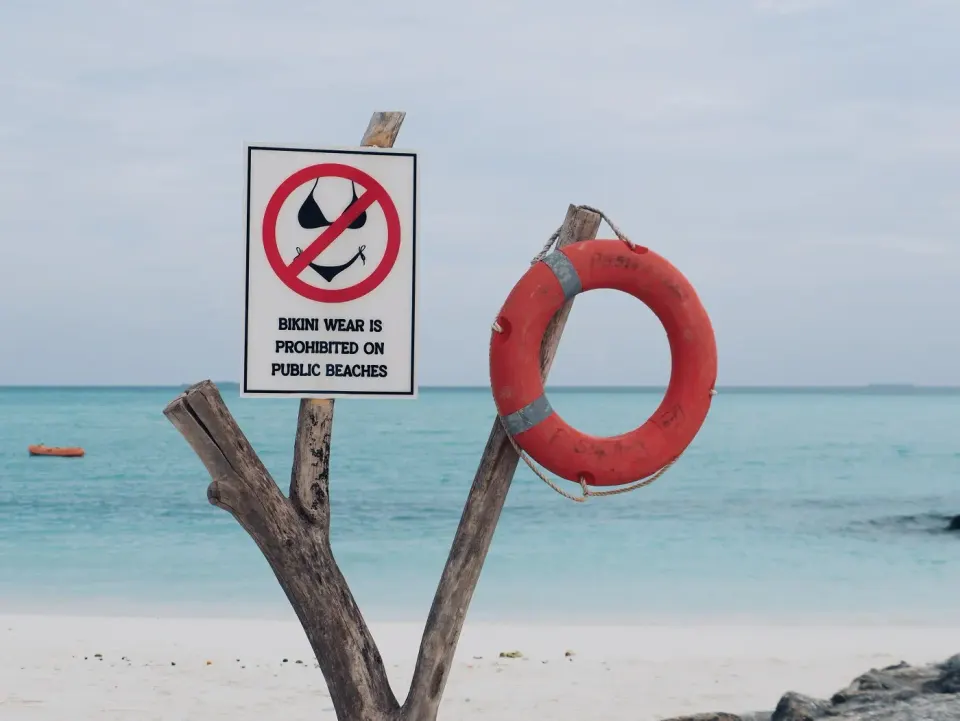
Local islands have bikini beaches where swimwear is fine, and simple rules for everywhere else. Here's what to wear, where, and why it matters.
Tips
Maldives Public Ferries, Explained
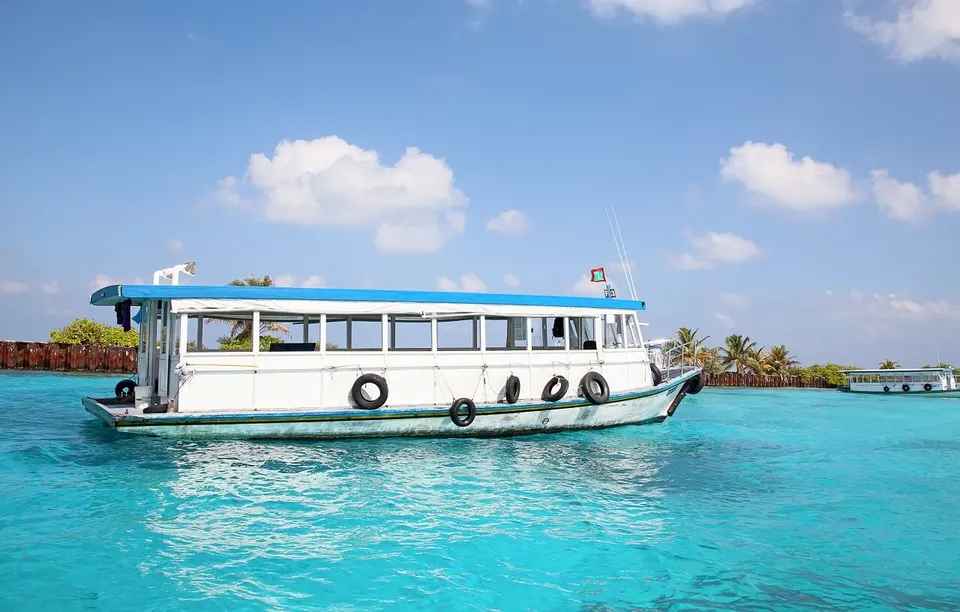
The cheapest way to reach the local islands is the public ferry. Here's how the network works, when the boats run and how to plan around them.
Tips
Local Rates, Explained
Many guesthouses and trips offer lower prices for Maldivians and residents. Here's who qualifies, what to bring and how to find local rates.