
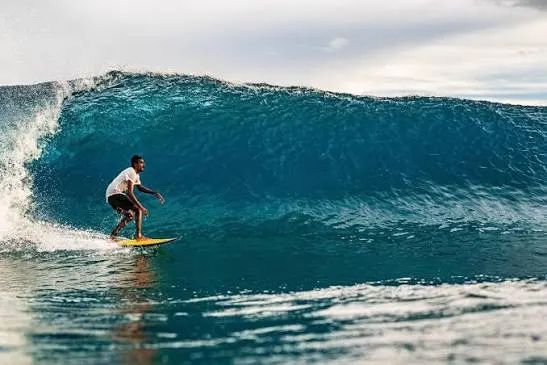
Thulusdhoo has become the surf capital of the Maldives' local islands. A small island in North Malé Atoll, just a short boat ride from the airport, it sits right next to one of the country's most famous waves. If you are planning a Thulusdhoo surf trip, this guide covers the breaks, the seasons, lessons, boat trips and how to surf respectfully in a local community.
If you still need to plan your journey, our guide to reaching Thulusdhoo covers ferries and speedboats in detail.
Why surf in the Maldives?
The Maldives sits in the middle of the Indian Ocean, exposed to long-distance swells generated by storms far to the south. When those swells reach the outer reefs of the atolls, they break over coral in clean, peeling waves. The water is warm all year, there is no need for a wetsuit, and the reefs are some of the most beautiful places on earth to paddle out.
Most surfing in the Maldives happens from resorts or surf charter boats. Thulusdhoo is different: it lets you surf world-class waves while staying in a guesthouse on a real local island, at a fraction of the cost.
The breaks
Cokes
Cokes is Thulusdhoo's signature wave, named after the Coca-Cola bottling plant on the island. It is a right-hand reef break that can produce fast, hollow sections on good swells. Because it is right next to the island, you can walk to it from many guesthouses and paddle out.
- Level: intermediate to advanced. It can be powerful, and the reef is shallow in places.
- Best tide and swell: local surfers and surf schools will tell you the best conditions on the day. Ask before you paddle out.
- Crowd: can be busy on good days, with guests from the island and boats from nearby.
Chickens
Chickens is a left-hand reef break a short boat ride away. It takes its name from an old poultry farm on a nearby island. On the right swell it offers long, fun walls with sections you can play on.
- Level: intermediate and up.
- Access: by boat from Thulusdhoo with a surf school or guesthouse.
Other breaks nearby
North Malé Atoll has several other well-known waves within reach by boat, some used mainly by resort or charter guests. Surf schools in Thulusdhoo know which ones are open and how to reach them, so ask when you book a boat trip. Some also run trips to gentler spots that suit beginners.
When to surf
The main surf season in the central Maldives runs roughly from March to October, during the southwest monsoon. This is when the most consistent swells arrive. The middle months often bring the biggest waves, while the shoulder months can bring smaller, cleaner days and fewer people.
From around November to February, the northeast monsoon brings calmer seas and drier weather. Surf is less consistent, but it is a great time for snorkelling and beach days. Read when to go: month by month to plan around both.
Wind and weather
The southwest monsoon also brings wind and showers. Early mornings are often the cleanest time to surf, before the wind picks up. Don't be put off by a cloudy forecast: rain in the Maldives usually comes in short, heavy bursts followed by sunshine.
Lessons and coaching
Several surf schools on Thulusdhoo offer lessons for beginners, coaching for improvers and guided sessions for experienced surfers. A typical beginner lesson includes a land briefing on safety and technique, then time in the water with an instructor. Coaching sessions might include video analysis to help you improve.
If you are new to surfing, don't try Cokes on your own. Take a lesson at a gentler spot first, and learn about reef safety and surf etiquette.
Board hire and gear
- Board hire: available from surf shops and some guesthouses. Book ahead in peak season.
- Bring your own: if you prefer, but check airline and speedboat fees for boards.
- Reef booties: useful for walking over coral at low tide.
- Rash vest: essential for sun protection. Many surfers also wear leggings.
- Reef-safe sunscreen and zinc: the sun is intense.
- Ding repair kit: reefs are hard on boards.
Surf etiquette
Good manners in the water keep everyone safe and happy:
- The surfer closest to the peak has priority. Don't drop in.
- Paddle around the break, not through the line-up.
- Respect local surfers. They live here and surf these waves year-round.
- Hold on to your board; a loose board on a crowded reef is dangerous.
- Be friendly. A smile and a greeting go a long way.
Respecting the island
Thulusdhoo is a local Muslim community, not a resort. Outside the bikini beach and the water, dress modestly. Cover up when walking through the village to the break: a T-shirt and board shorts or a sarong over a swimsuit works well. Alcohol isn't available on the island. Read our guide to bikini beaches and island rules for more on what to wear and where.
Where to stay
Thulusdhoo has a good choice of guesthouses, from simple surf lodges to boutique stays. For surf trips, look for:
- Distance to Cokes, ideally a short walk.
- Board storage and a rinse area.
- Links with a surf school or boat trips.
- Early breakfast for dawn sessions.
Browse stays on Holiday Atolls to compare options and message owners directly.
Non-surfing days
Even on flat days, Thulusdhoo has plenty to do:
- Snorkel the lagoon or join a sandbank trip. See sandbank picnics: the how-to.
- Take a sunset cruise to look for dolphins.
- Try yoga, which many surf camps offer.
- Eat your way through local short eats; our Maldivian food guide tells you what to try.
A sample surf week
Every trip depends on the swell, but a week on Thulusdhoo often looks something like this:
- Day 1: arrive by speedboat, settle in and walk to Cokes to watch the line-up at sunset. Talk to a surf school about conditions.
- Day 2: dawn session at Cokes if it suits your level, or a lesson for beginners. Rest in the middle of the day, when the sun is strongest.
- Day 3: boat trip to Chickens or another nearby break, with a snorkel stop on the way back.
- Day 4: rest day. Sandbank picnic, yoga or a lazy swim in the lagoon.
- Days 5–6: surf whichever break is working best, with a coaching session and video review.
- Day 7: one last early session, then a short speedboat to the airport.
Build in at least one rest day. Surfing every session in strong sun and warm water is tiring, and rest days help you avoid injuries and sunburn.
Staying safe on the reef
Reef breaks are wonderful, but coral is sharp and the water can be shallow at low tide. Learn the safest way in and out of the water before your first session; surf schools and local surfers will show you the channel. Wear booties when walking on the reef, and protect your head when you fall. If you get a reef cut, clean it with fresh water and antiseptic straight away and keep it dry and covered, because cuts can get infected quickly in the tropics.
Know your limits. If the waves look bigger than you are comfortable with, watch from the shore or take a boat to a gentler spot. There is no shame in sitting out a big day.
Surfing for Maldivians and residents
Surfing has a growing community in the Maldives, and Thulusdhoo is one of its homes. If you live in Malé, it is easy to come for a weekend of surfing or lessons. Many guesthouses and surf schools offer local rates. Our weekend escapes from Malé list includes Thulusdhoo for exactly that reason.
Surf schools are also a good place to meet other surfers, both visitors and locals, and to find out which days are best for each break.
Surf trip checklist
- Check the season and swell forecast before booking.
- Book lessons or boat trips early in peak months.
- Pack rash vests, reef booties and plenty of sunscreen.
- Bring a basic first-aid kit for reef cuts. Clean any cut quickly and well.
- Get travel insurance that covers surfing.
The short version
Thulusdhoo offers something rare: world-class waves on the doorstep of a friendly local island, just a short ride from the airport. Surf Cokes if you have the skills, take a boat to Chickens and other breaks, or learn with a local school. Come between March and October for the best swells, respect the island and the line-up, and you will find it hard to leave.
Questions
When is the surf season in Thulusdhoo?
The main surf season runs roughly from March to October, during the southwest monsoon, when swells from the Indian Ocean reach the atoll. The middle of the season is often the most consistent.
Is Cokes good for beginners?
Cokes is a powerful right-hand reef break and is best for intermediate and advanced surfers. Beginners should take lessons with a local surf school at gentler spots.
Do I need a boat to surf Chickens?
Yes. Chickens is a short boat ride from Thulusdhoo. Surf schools and guesthouses run boat trips to it and other nearby breaks.
Can I rent a surfboard on Thulusdhoo?
Yes, several surf shops and guesthouses rent boards and offer lessons. Bring your own if you are an experienced surfer who prefers your own board.
Keep reading
Islands
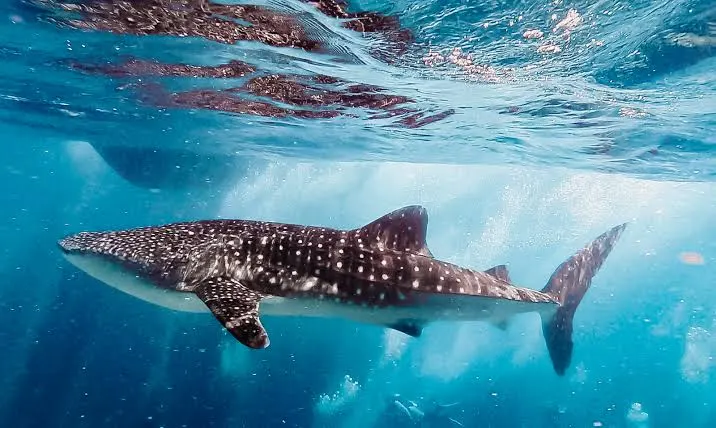
Whale Sharks at Dhigurah
South Ari is one of the best places in the world to swim with whale sharks. Here's how to see them from Dhigurah, and how to do it responsibly.
Islands
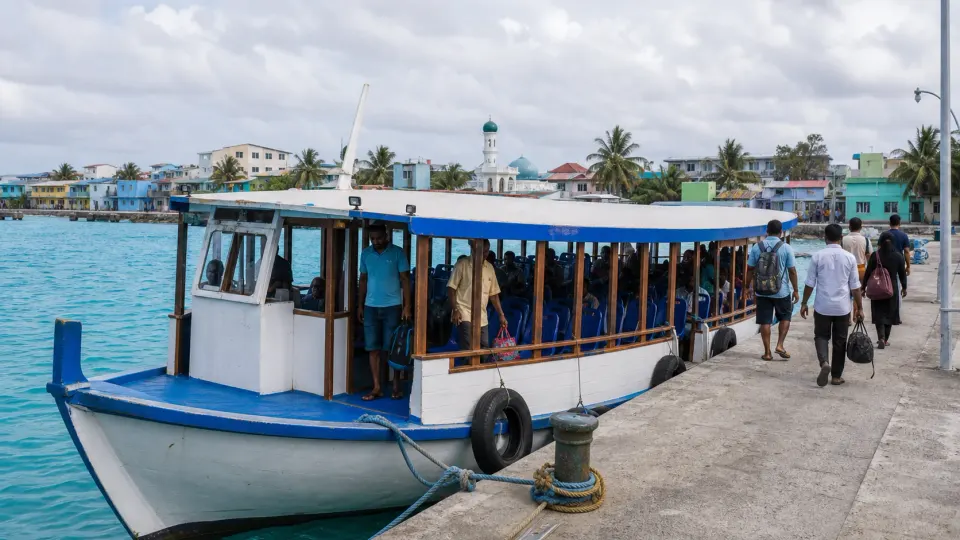
Malé to Maafushi: Ferry or Speedboat?
Public ferry or speedboat? Here's how to get from Malé and Velana Airport to Maafushi, with journey times, rough costs and tips that make the trip easy.
Islands
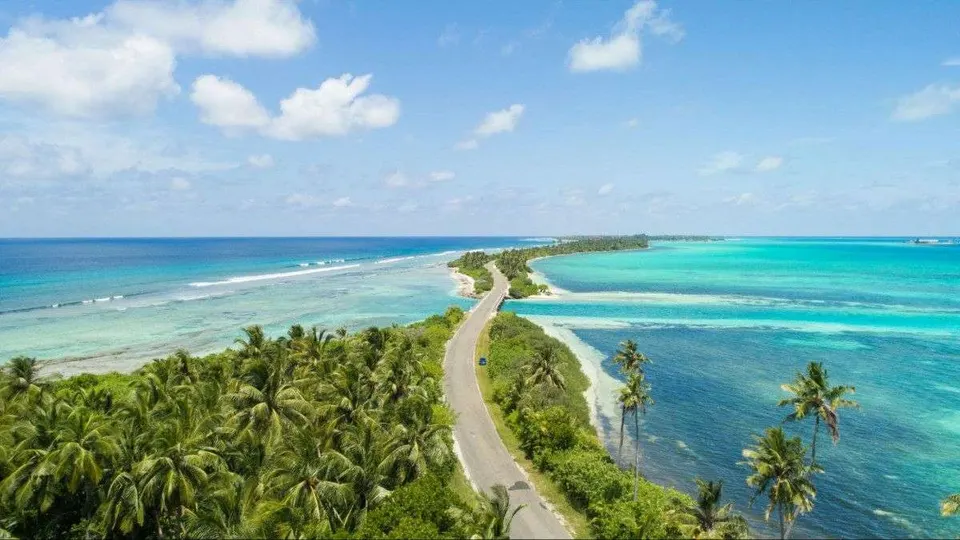
Addu City Guide
Discover Hithadhoo and the connected islands of Addu City. From British colonial history and the longest road in the Maldives to the integrated RTL bus and ferry network, here is your ultimate guide to the "Southern Capital."