
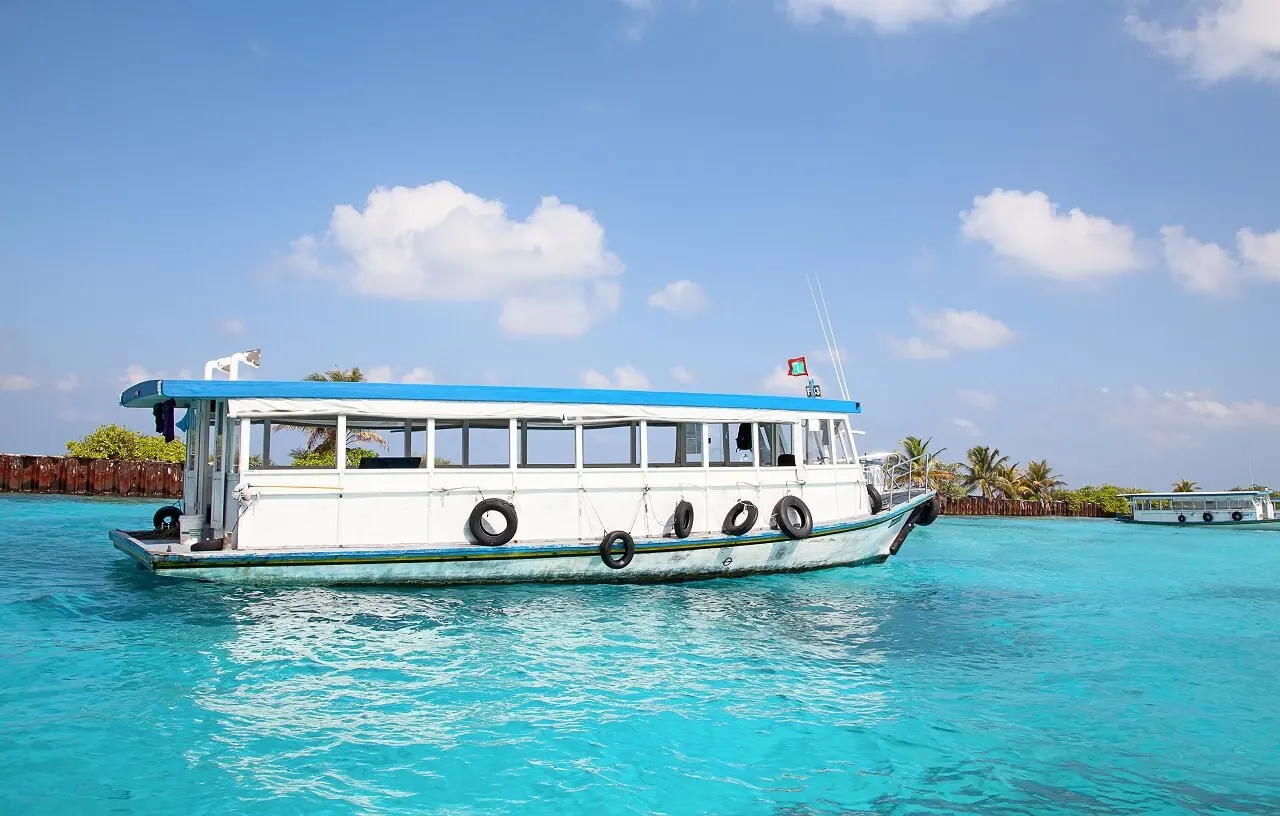
The Maldives public ferry network is the backbone of everyday island life. It carries students, workers, families and cargo between the islands, and it is also the cheapest way for travellers to reach guesthouse islands. Ferries are slow and run on fixed timetables, but once you understand how they work, they open up the whole country on a small budget.
This guide explains how the ferry system is organised, where the boats leave from, when they run, what they cost and how to plan a trip around them. If you are heading to one island near Malé, start with our practical guide Malé to Maafushi: ferry or speedboat?, which uses the same principles.
How the network works
The Maldives is a chain of 26 natural atolls with around 190 inhabited islands. Public ferries link the islands within each atoll and connect the atolls closest to Malé with the capital. Routes are usually numbered and run on a set timetable, with the boat stopping at several islands along the way.
Think of it like a slow bus service on water. The ferry leaves one island in the morning, calls at a few others and reaches Malé or the atoll capital some hours later. In the afternoon it often makes the return trip. On longer routes the boat might only make the journey a few times a week.
The main hubs
- Malé: ferries to Kaafu Atoll islands such as Maafushi, Guraidhoo, Gulhi, Huraa, Himmafushi and Thulusdhoo, as well as routes to Vaavu and Ari atolls.
- Villimalé and Hulhumalé: frequent short-hop ferries connect Malé with these neighbouring islands throughout the day.
- Atoll capitals: in the outer atolls, ferries usually run between the islands and the atoll capital, where you can connect onwards.
Where ferries leave from in Malé
Malé has several ferry terminals, and the one you need depends on the direction you are travelling. Ferries to the southern islands of Kaafu Atoll and to Vaavu usually leave from the western side of the city. Ferries to the northern islands of Kaafu leave from a different jetty. The airport ferry and the Hulhumalé services have their own terminals too.
Because the terminals move from time to time and timetables change, the safest approach is to ask your guesthouse for the exact jetty and departure time a day or two before you travel. They deal with this every week and usually know about changes before they are published.
Timetables and the Friday rule
The most important rule to remember: most public ferries don't run on Fridays. Friday is the Maldivian weekend and the day of congregational prayer, so long-distance routes stop. Some short city services still run, but the inter-island network largely pauses.
Other things that affect the timetable:
- Public holidays: services change around national holidays and Eid.
- Ramadan: departure times can shift during the fasting month. Our guide to travelling during Ramadan explains what else changes.
- Weather: during the southwest monsoon, rough seas can delay or cancel boats, especially on open crossings between atolls.
What ferries cost
Public ferry fares are very low. Short routes within Kaafu Atoll usually cost the equivalent of a couple of US dollars, and longer routes a little more. Fares are set by the operator, and visitors and locals often pay similar amounts. You normally pay in Maldivian rufiyaa at the terminal or on board, though some routes accept US dollars.
Carry small notes and coins. Ticket sellers don't always have change for large notes.
What the boats are like
Public ferries are working boats, not tourist vessels. Expect wooden or fibreglass hulls, bench seats inside, open decks at the back and cargo stacked wherever it fits. Some newer boats have air-conditioned cabins and proper seats. Toilets are basic or absent on short routes.
The atmosphere is friendly and relaxed. People chat, nap and scroll their phones, and children run between the benches. You may share the deck with fish, fruit, construction materials and motorbikes. It is one of the best ways to see real daily life in the Maldives.
Luggage tips
- Large bags usually go on the roof or the back deck. Cover them, because spray and rain are common.
- Keep your passport, phone, cash and medicines in a small bag on your lap.
- A backpack is easier than a suitcase on ferry steps and island jetties.
- Label your bag with your name and the island you are going to.
Ferry etiquette
The ferry is local space, so follow local customs. Dress modestly with shoulders and knees covered. Offer your seat to older people and women with small children. Keep music low and avoid public displays of affection. During Ramadan, don't eat or drink openly on the boat in daylight hours. Our guide to island life and customs goes into more detail.
Planning an island-hopping trip by ferry
Ferries make multi-island trips possible on a small budget, but they need careful planning. A few principles help:
- Stay within one atoll. Travel between islands in the same atoll is much easier than crossing between atolls by ferry.
- Plan around Fridays. Don't schedule a ferry move on a Friday, and make Friday a beach or rest day.
- Allow buffer days. If a ferry is cancelled by weather, you need room in your plan. Never schedule a ferry on the same day as an international flight.
- Mix ferry and speedboat. Use the ferry where the timing works and a shared speedboat where it doesn't.
For a ready-made route, see our itinerary 10 days, 3 islands, small budget.
Ferry or speedboat?
Shared speedboats run alongside the ferry network on popular routes. They cost more but leave several times a day, run on Fridays and take a fraction of the time. Many travellers use the speedboat on arrival and departure days, when timing matters most, and the ferry in between. Read speedboat, ferry or seaplane for a full comparison.
Popular ferry routes from Malé
These islands are among the most popular with travellers who use the ferry. Check current timetables before you plan.
- Maafushi: the classic first local island, around one and a half hours from Malé.
- Guraidhoo and Gulhi: quieter islands close to Maafushi, good for snorkelling.
- Thulusdhoo and Himmafushi: surf islands in North Malé Atoll. See our guide to reaching Thulusdhoo.
- Huraa: a small island with mangroves and a relaxed feel.
- Fulidhoo: in Vaavu Atoll, a longer trip but famous for its calm, small-island charm.
Common mistakes to avoid
- Planning to take a ferry the same afternoon you land. The daily ferry has often left already.
- Forgetting about Fridays, especially for check-out and flight days.
- Trusting an old timetable found online. Always confirm with your guesthouse.
- Carrying only large notes or relying on a card.
- Booking a guesthouse on an island with no direct ferry and assuming you can get there cheaply.
A typical ferry day, step by step
If you have never taken a Maldivian ferry, here is what the day usually looks like, so nothing comes as a surprise.
- The evening before: message your guesthouse to confirm the departure time and terminal. Ask them to tell the next guesthouse you are coming by ferry, so someone meets you at the harbour.
- Morning: eat breakfast early and get to the terminal 30 to 45 minutes before departure. Buy your ticket at the counter if there is one, or wait to pay on board.
- Boarding: hand your big bag to the crew or carry it onto the back deck. Find a seat inside if you want shade, or on deck for the breeze and the view.
- On the way: the boat stops at other islands to drop off people and cargo. Each stop takes a few minutes. Keep an eye on the island names so you know where you are.
- Arrival: wait for the crew to unload the bags, then walk up the jetty. On most guesthouse islands, your host is waiting or the guesthouse is only a few minutes' walk away.
Ferries for Maldivians and residents
For people who live in the Maldives, the ferry network is the normal way to visit family, attend weddings and take a weekend away. If you are planning a short break from Malé, the ferry is often enough for islands within Kaafu Atoll, and it leaves your budget free for a better room or an extra trip. Our list of weekend escapes from Malé picks out islands that are easy to reach this way, and many guesthouses on Holiday Atolls offer local rates to Maldivians and work-permit holders.
The short version
The Maldives public ferry is cheap, safe and full of local life. It runs on fixed timetables, mostly not on Fridays, and changes with weather and holidays. Plan within one atoll, build in buffer days, confirm times with your guesthouse and use speedboats when timing matters. Do that, and the ferry becomes one of the highlights of your trip rather than a hurdle.
Questions
Who runs the public ferries in the Maldives?
Most public ferry routes are run by the state transport company MTCC under the national ferry network, with some regional and private operators on local routes. Timetables are published by the operator and shared by most guesthouses.
Do Maldives ferries run every day?
Most routes run several days a week but not on Fridays. Some busy routes near Malé run every day except Friday, while far-off routes may only run a few times a week.
Can I book a ferry ticket online?
Usually not. You buy your ticket at the terminal or on board. Ask your guesthouse to confirm the time the day before.
Are ferries cheaper for locals?
Ferry fares are already low for everyone. The bigger saving for Maldivians and residents is on speedboats, guesthouses and trips, where local rates often apply.
Keep reading
Tips
Local Rates, Explained
Many guesthouses and trips offer lower prices for Maldivians and residents. Here's who qualifies, what to bring and how to find local rates.
Tips
The Maldives on a Budget: Real Costs
Yes, you can visit the Maldives without a resort budget. Here's what a trip on local islands really costs and how to make your money go further.
Tips
When to Go: Month by Month
Sunny and dry, or green and wild? Here's what the weather, sea and wildlife are like each month in the Maldives, so you can choose your dates.