
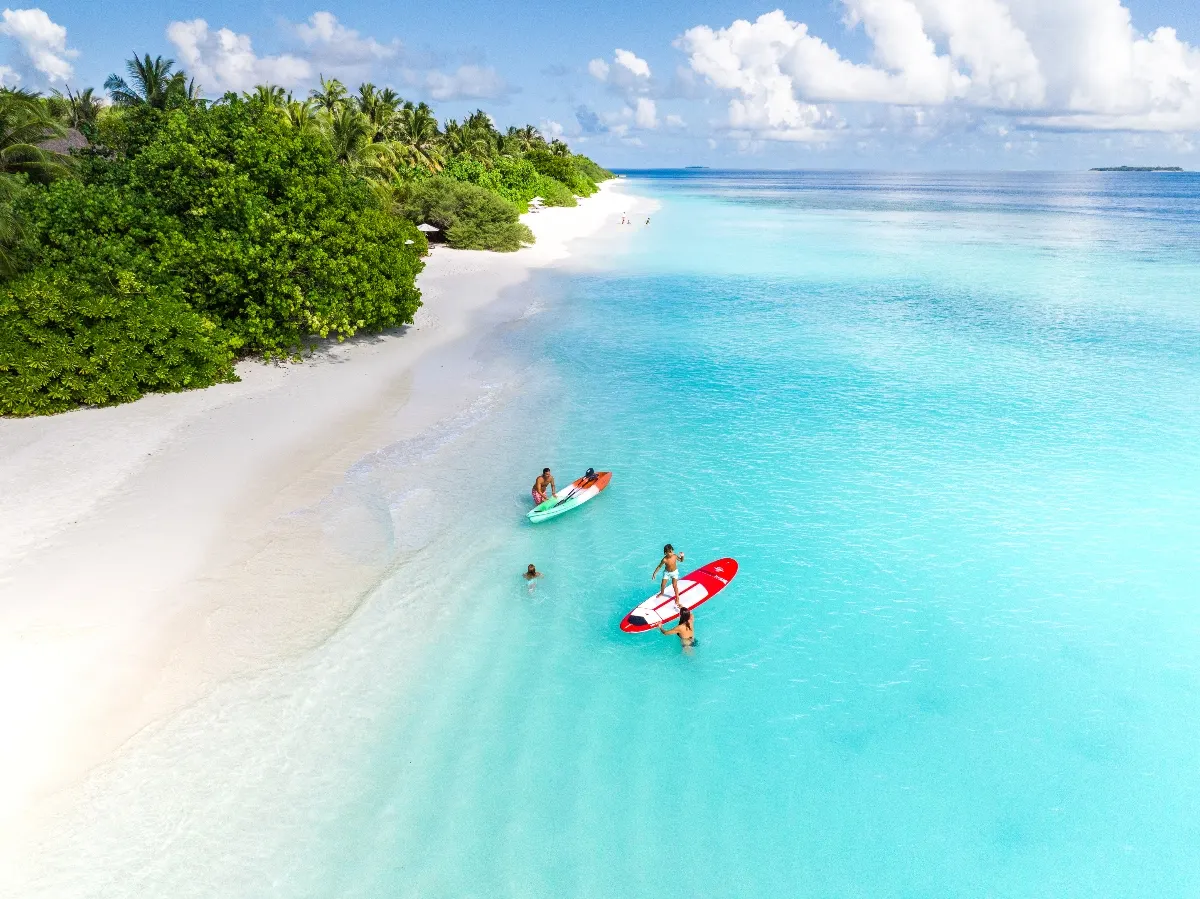
The Maldives is warm all year, but the weather, sea and wildlife change with the seasons. Choosing the best time to visit the Maldives depends on what matters most to you: guaranteed sunshine, calm seas for snorkelling, big waves for surfing, manta rays, whale sharks or lower prices. This month-by-month guide explains what to expect, so you can pick the right dates for your trip.
Understanding the two monsoons
The Maldives has two main seasons, shaped by the monsoon winds. Maldivians call them by their traditional names:
- Iruvai, the northeast monsoon (roughly December to April): generally the dry season. Expect more sunshine, lower humidity, calmer seas and excellent visibility underwater.
- Hulhangu, the southwest monsoon (roughly May to November): generally the wetter season. Expect more wind, waves and showers, but also lush greenery, fewer visitors and great marine life.
The transition months, roughly April to May and October to November, can bring changeable weather and calm, glassy days.
Temperatures stay warm all year, usually between about 26 and 32 degrees Celsius, and the sea stays warm too. The main differences are rain, wind, sea conditions and crowds.
Month by month
January
One of the driest, sunniest months. Calm seas and great visibility make it ideal for snorkelling, diving and sandbank trips. This is peak season, so prices are higher and popular islands busier. Book early.
February
Often the best weather of the year, with long sunny days and calm water. Excellent for families, couples and divers. Peak season continues.
March
Still dry and sunny, with warm sea temperatures. The start of the surf season in some areas as swells begin to arrive. A great all-round month.
April
Hot and generally sunny, with calm seas. A transition month: the weather can become more changeable towards the end. Good for diving and snorkelling. Surf picks up.
May
The southwest monsoon begins. Expect more showers and wind, though there are still many sunny days. Prices often drop. Manta activity increases on the eastern sides of many atolls. Surf season is in full swing.
June
One of the wetter, windier months, with more frequent showers. Seas can be rough on open crossings. A great time for surfers and for manta encounters, including at Hanifaru Bay in Baa Atoll. Quieter islands and lower prices.
July
Similar to June, with mixed weather. Many sunny breaks between showers. Surf, mantas and lower prices make it popular with surfers and divers. School holidays in some countries bring families.
August
Continued southwest monsoon conditions, though often improving towards the end. Manta season continues. A good month for budget travellers who don't mind some rain.
September
Mixed weather, with some of the year's biggest surf. Quieter islands and good deals. Manta activity remains strong at many eastern sites.
October
A transition month. Weather becomes more settled, with calmer days becoming more common. The end of the main surf season. A good shoulder month with fair prices.
November
Another transition month. Some rain is still possible, but the sea is often calm and visibility improves. Prices start to rise towards the end of the month. Manta sites begin to shift to the western sides of atolls.
December
The northeast monsoon returns, bringing drier weather and calmer seas. Peak season begins, especially around the end-of-year holidays. Book well ahead for this period.
Best time for...
Beach and sunshine
January to April usually offers the most sunshine and the least rain.
Snorkelling and diving
Good year-round. December to April often brings the best visibility. May to November brings more plankton, which can lower visibility but attracts mantas and whale sharks. Read your first dive in the Maldives.
Manta rays
Year-round, but they move with the monsoon: eastern sides of atolls (including Hanifaru Bay) from around May to November, western sides from around December to April. Read where to snorkel with mantas.
Whale sharks
Seen year-round in South Ari. Calmer seas from December to April make trips more comfortable. Read whale sharks at Dhigurah.
Surfing
Roughly March to October, with the most consistent swells in the middle of the season. Read surfing Thulusdhoo.
Budget travel
May to October usually brings the lowest prices and the quietest islands. Read the Maldives on a budget: real costs.
Families
December to April for calm seas and easier boat transfers. Read school holidays on a local island.
Island hopping
December to April for smoother crossings between atolls, though island hopping works year-round with flexibility. Read 10 days, 3 islands, small budget.
Rain in the Maldives: what it's really like
Rain in the Maldives rarely lasts all day. More often, a dark cloud rolls in, drops a heavy shower for half an hour or so, then moves on, leaving sunshine behind. Some days in the wet season are entirely sunny. Others are grey and windy. Pack a light rain jacket, keep plans flexible and enjoy the dramatic skies.
Sea conditions and transfers
During the southwest monsoon, open-water crossings between atolls can be rough, and speedboats occasionally delay departures. Seasickness is more common. If you are prone to it, choose islands close to Malé, or travel in the northeast monsoon. Always leave a buffer day before your international flight. Read speedboat, ferry or seaplane.
Holidays and festivals
Islamic holidays such as Ramadan and Eid follow the lunar calendar and move earlier each year. They affect transport, opening hours and guesthouse availability. Read travelling during Ramadan and planning an Eid island break.
Independence Day on 26 July and other national holidays bring celebrations, especially in Malé.
Crowds and prices
- Busiest and priciest: late December to early January, and February to March.
- Shoulder seasons: April and November, often with good weather and better prices.
- Quietest and cheapest: May to September, the heart of the southwest monsoon.
For residents, local rates tend to be steadier through the year, though weekends and holidays fill up quickly. Read local rates, explained.
Climate change and the seasons
Weather patterns can vary from year to year, and recent years have brought some unusual conditions. Use this guide as a general pattern, not a guarantee, and check forecasts closer to your trip.
Packing by season
- December to April: lots of sun protection, light clothes, a hat and plenty of reef-safe sunscreen.
- May to November: add a light rain jacket, a dry bag for boats and seasickness tablets.
- All year: modest clothes for local islands, swimwear and a cover-up.
Read our packing list for local islands.
Daylight and sunsets
Because the Maldives sits just north of the equator, day length barely changes through the year. The sun rises around six in the morning and sets around six in the evening, give or take half an hour depending on the month. That means roughly twelve hours of daylight whenever you visit. Sunsets are quick, and darkness falls soon after, so plan sandbank trips and sunset cruises with that in mind.
The sun is very strong all year, even on cloudy days. Plan outdoor activities for the morning and late afternoon, and rest in the shade around midday.
Planning around school holidays
School holidays affect prices and availability in two ways. International school breaks, such as the end-of-year holidays and Easter in many countries, bring families from abroad and push prices up at popular guesthouses. Maldivian school holidays bring local families to islands near Malé, filling rooms and speedboats on weekends. If your dates are flexible, travelling just before or after these periods often gives you better prices and quieter beaches. Read school holidays on a local island for family planning tips.
Our verdict
There is no bad time to visit the Maldives. If you want the best chance of sunshine and calm seas, go between January and April. If you want surf, mantas on the eastern sides of atolls, quieter islands and lower prices, consider May to October. Whatever you choose, bring flexibility and sunscreen, and you will find paradise waiting.
Booking tips by season
For peak season, roughly late December to March, book rooms and speedboats several months ahead, especially for popular islands and the end-of-year holidays. For the shoulder months of April and November, a few weeks ahead is usually enough. In the southwest monsoon, you can often book closer to your dates and find deals, though Eid and local school holidays still fill islands near Malé. Whatever the season, choose flexible cancellation where you can, and always leave a buffer day before your flight home.
The short version
The best time to visit the Maldives depends on your priorities. The northeast monsoon, roughly December to April, brings the driest weather and calmest seas, at peak prices. The southwest monsoon, roughly May to November, brings more rain and wind, but also surf, mantas, quieter islands and better deals. Plan around holidays, allow buffer days for transfers and enjoy the warm water whenever you go.
Questions
What is the best month to visit the Maldives?
For the driest weather and calmest seas, many people choose January to March. For surf, mantas on the eastern sides of atolls and lower prices, May to October has its own advantages.
When is the rainy season in the Maldives?
The southwest monsoon, roughly May to November, brings more rain and wind. Rain usually falls in short, heavy showers rather than all day.
Is the Maldives hot all year?
Yes. Temperatures are warm year-round, usually around 26 to 32 degrees Celsius, with warm sea temperatures too.
Is it worth visiting in the rainy season?
Yes, for many travellers. Prices are often lower, islands quieter and marine life excellent. Just allow flexibility for weather.
Keep reading
Tips
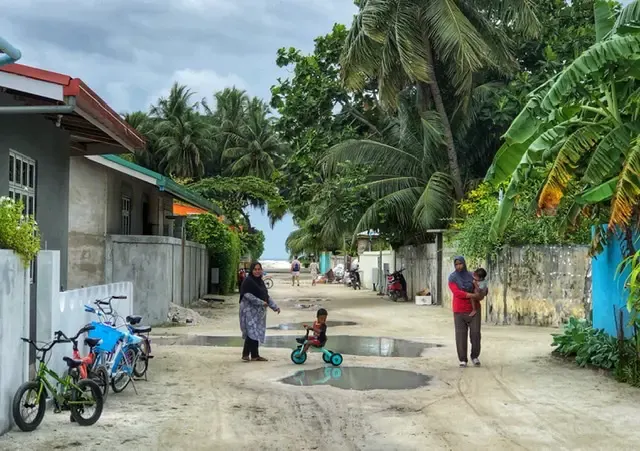
Island Life: Customs to Know
Behind the beaches is a living island culture. Here's what daily life is like on a local island and the customs that help you fit in.
Tips
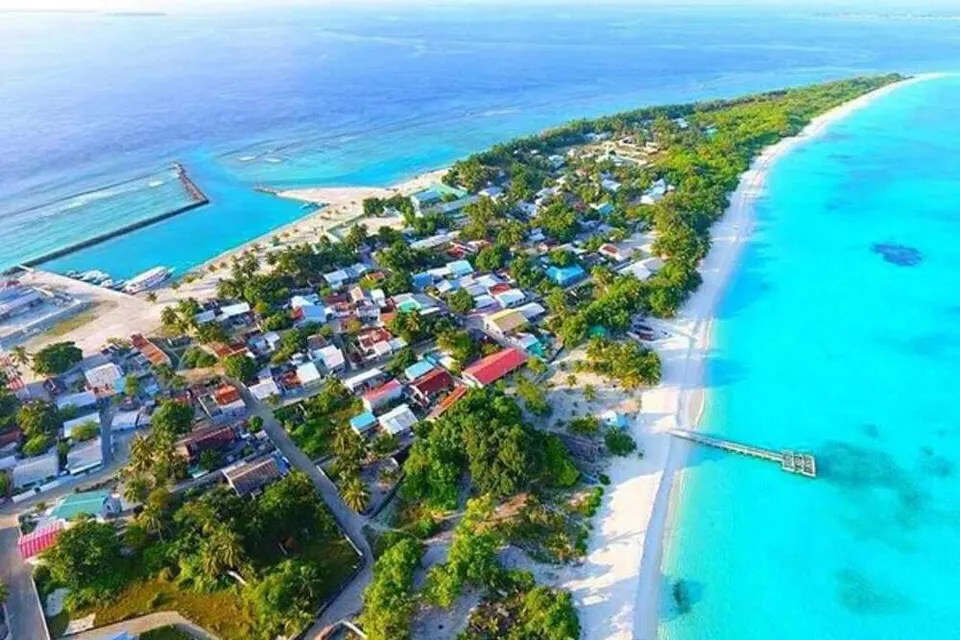
Dhidhdhoo: The Ultimate Guide to the Northern
Everything you need to know about traveling to Dhidhdhoo using the Raajje Transport Link (RTL), exploring the island’s culture, and navigating the northernmost reaches of the Maldives.
Tips
Preserving Our Islands: How Your Choices Make a Difference
The Maldives is world-famous for its turquoise waters, coral reefs, and white-sand beaches. Beyond luxury resorts, local islands now welcome travelers seeking authentic experiences, cultural connection, and meaningful travel.